

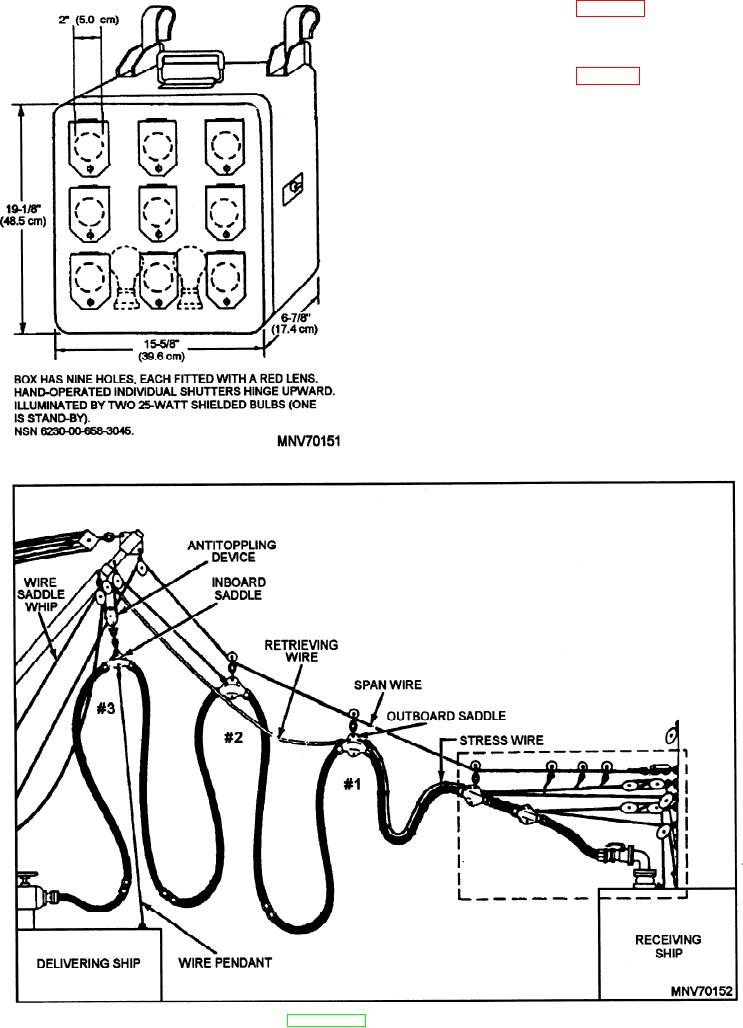
conventional span-wire rig (fig. 5-28). The tensioned
span-wire method is referred to as STREAM.
STREAM rigs are rigged with four saddles and a hose
approximately 300 feet long (fig. 5-29). The hose hangs
from trolley blocks that ride along the span wire. Saddle
whips position the hose while the ship is being fueled
and are used to retrieve the hose after the fueling
operation is complete.
The span-wire rig permits ships to open out from
140 to 180 feet. Such distance is reasonably safe and
makes it fairly easy to maneuver and keep station.
These factors not only allow commanders a wider
latitude in choosing a fueling course but also facilitate
the use of antiaircraft batteries, should the need for them
arise. Additionally, the high suspension of the hose
affords fair protection for it in rough weather.
CLOSE-IN METHOD
As we stated before, the close-in method of fueling
is used when the delivering ship is not equipped with the
span-wire rig or the receiving ship does not have a pad
eye strong enough to hold a span wire.
Figure 5-27.--Station marker light box.
Figure 5-28.--Span-wire rig.
5-19