

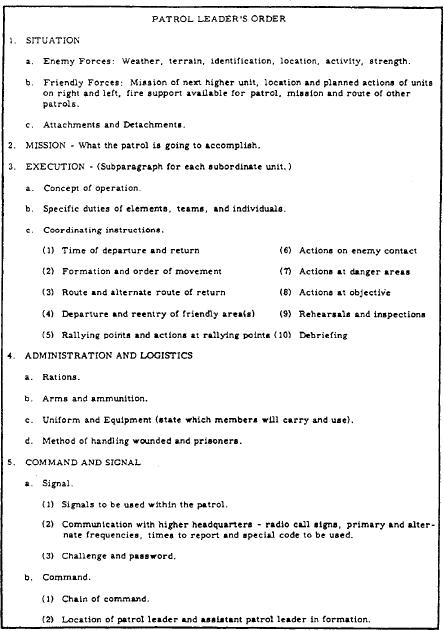
Figure 11-36--Format for patrol leader's order.
the order or notes is kept by the staff of the issuing
order. When a code name for the operation is used, it is
commander.
written on the same line as the OPORD title and number.
Written orders may be in a message or other
The BODY contains the task organization (when too
convenient form. The use of accompanying maps,
complicated or lengthy to be contained in paragraph 3)
photomaps, overlays, and tables saves time and words
and the five main numbered paragraphs. The five
and minimizes errors. In many cases, an entire OPORD
paragraphs cover the following topics in the order listed:
can be placed on a map or overlay.
(1) SITUATION, (2) MISSION, (3) EXECUTION, (4)
ADMINISTRATION AND LOGISTICS, and (5)
COMMAND AND COMMUNICATIONS. The
Format for OPORD
acronym SMEAC (using the frost letter of each topic)
helps you remember these topics. Remember that the
five main topics of an operation order must be covered
The HEADING contains the security classification,
whether the order is from a battalion commander,
a statement about changes from oral orders, copy
platoon commander, squad leader, or fire team leader.
number (handwritten), issuing headquarters, the place
Naturally, battalion operation orders are quite lengthy,
of issue, date and time of issue, file notation, title and
and a patrol leader's order is usually brief. The format
serial number of the order, references (maps, charts, and
of a patrol leader's order is shown in figure 11-36. The
photomaps), and the time zone to be used throughout the
11-37