

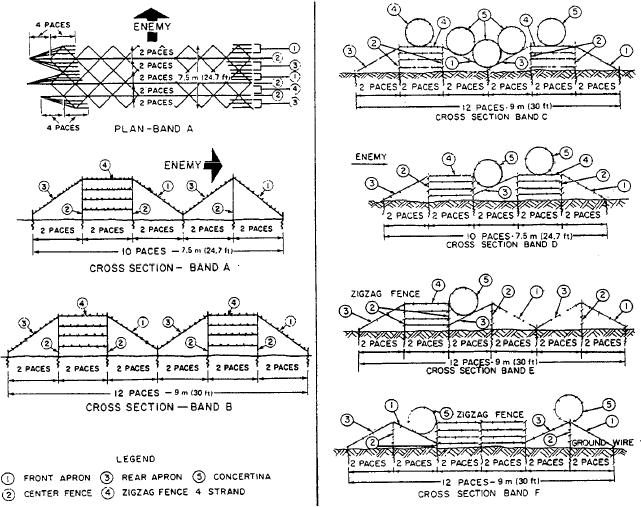
Figure 8-35.--Combination bands of wire obstacles.
pickets at irregular intervals of 2.5 to 10 feet. The height
frame, you can use it as an effective underwater obstacle
in beach defense. Knife rests are normally constructed
of the barbed wire should vary between 9 and 30 inches.
with 9.8 to 16.4 feet between cross members. They
Site tanglefoot in scrub, if possible, using bushes as
should be approximately 3.3 feet high. The cross
supports for part of the wire. In open ground, use short
members must be firmly lashed to the horizontal
pickets. Control the growth of grass to help prevent the
member with plain wire. When placed in position, knife
enemy from secretly cutting lanes in, or tunneling under,
rests must be fixed securely.
the entanglement.
Trip Wires
COMBINATION BANDS
Immediately after a defensive position is occupied
The high-wire entanglement may be built with
and before an attempt is made to erect protective wire,
additional rows of fences and triangular cells to form
place trip wires just outside of grenade range, usually 98
bands of any desired depth, or it may be made more
to 131 feet. These wires should stretch about 9 inches
effective by adding front and rear aprons. Other types
above the ground and be fastened to pickets at not more
of fences may be combined in bands to form obstacles
than 16.4-foot intervals. Conceal them in long grass or
that are more difficult to breach than a single belt.
crops on a natural line, such as the side of a path or the
Portable, barbed-wire obstacles may be added as
edge of a field. Place the trip wires in depth in an
described previously. The construction of bands of
irregular pattern.
various types is desirable because this makes it difficult
Tanglefoot
for the enemy to develop standard methods of passage.
It also allows for fitting the obstacles to the situation
Use tanglefoot (fig. 8-34) where concealment is
with the time and materials available. Six different types
essential and to prevent the enemy from crawling
of effective combination bands are shown in figure 8-35.
between fences and in front of emplacements. Use the
Other variations can be developed readily.
obstacle in a minimum depth of 32.8 feet. Space the
8-21